
Table of Contents
Self‑Sabotage Loop is that vicious internal cycle where you start strong, face resistance, and end up sabotaging yourself.
Ever have those moments where you finally get your life together?
You start a business.
You post content every day.
You feel like you’re on fire. 🔥
…And then you ghost.
Disappear.
Watch Netflix for three days straight.
Convince yourself it wasn’t the right time.
Then spiral into guilt and shame.
Yeah. That’s the self-sabotage loop.
And it’s stealing your success.
The worst part?
It’s not a time problem. It’s not a motivation problem.
It’s a subconscious loop built on outdated beliefs, survival instincts, and a hidden fear of expansion.
Let’s decode it — and break it for good.
What Is the Self-Sabotage Loop?
The Self-Sabotage Loop is that nasty internal cycle where:
- You start something with a lot of energy.
- You hit the dip (resistance, fear, overwhelm).
- You flinch or avoid or “take a break.”
- You blame yourself.
- You feel guilty.
- You start again with even less energy next time.
Then repeat. Again. And again. And again.
Sound familiar?
Maybe it’s starting a YouTube channel but quitting after 4 videos.
Maybe it’s launching an offer but ghosting your email list.
Maybe it’s spending 3 hours designing a landing page… and never actually publishing it.
No matter what your specific actions look like, the pattern is the same:
Start → Struggle → Flee → Blame → Repeat.
This loop is the #1 killer of momentum.
And momentum, my friend, is the fuel of wealth, freedom, and results online.
The Self‑Sabotage Loop shows up when we stop ourselves just as momentum builds.
Step 1: Understand What Self-Sabotage Really Is
Most people think self-sabotage is about laziness or lack of willpower.
Nope.
Self-sabotage is your brain’s way of protecting your current identity.
See, you’ve got a mental thermostat — a subconscious “comfort zone” wired around who you believe you are:
“I’m someone who tries hard, not someone who wins.”
“I’m a hard worker, not someone who has it easy.”
“I’m an underdog, not a leader.”
“I hustle, but I don’t actually make money.”
So the moment you start changing — like actually succeeding, getting attention, making money — that old identity starts to panic.
Your brain doesn’t say, “This is bad.”
It says, “This is unfamiliar.”
And unfamiliar = unsafe.
So you pull back. You procrastinate. You flake. You quit.
It’s not a failure.
It’s identity preservation.
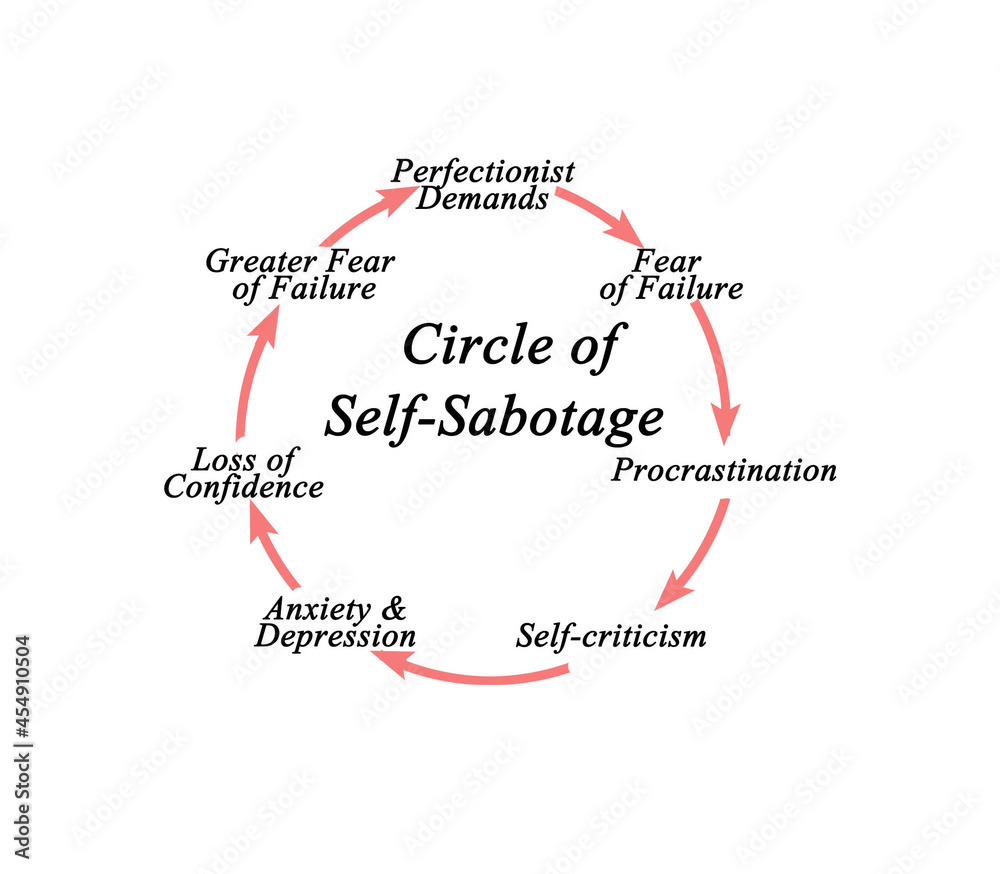
Step 2: Spot the Loop When It Happens
You can’t fix what you can’t feel happening.
Here’s how the self-sabotage loop usually plays out:
- You Get Inspired.
You read something, watch a video, and feel ready to change your life. - You Take Massive Action.
You go all in. New schedule. New content. New routine. - You Start Seeing Progress.
People respond. You get momentum. You even make a little money. - The Identity Conflict Hits.
Doubt creeps in. “Can I really keep this up?”
Fear shows up. “What if I fail publicly?”
Old stories whisper. “This isn’t who I am.” - You Pull the Plug.
You stop showing up. You tell yourself you’re “burnt out” or “need a break.” - Shame Kicks In.
You feel guilty for quitting. That guilt becomes more proof that you’re not “cut out for this.” - Back to Square One.
Rinse. Repeat.
Sound familiar?
This loop is psychological quicksand — the harder you try to push through without awareness, the deeper you sink.
But once you see the loop, you can break it.
The Real Reason We Self-Sabotage (and How to Stop)
Step 3: Break the Loop With This 3-Part Fix
Let’s talk about how to escape the pattern — permanently.
🔹 1. Redefine Your Identity
Instead of trying to “level up” with brute force, rewrite your internal script.
Here’s the new belief system to install:
“I’m someone who follows through.”
“It’s safe for me to be seen.”
“I create value and get paid for it.”
“I allow success to feel easy.”
“I’m not broken — I’m evolving.”
This isn’t woo-woo. It’s neuroscience.
Your actions follow your identity. Change the story, and the behavior will catch up.
Use mantras. Visualizations. Journal it. Say it out loud.
Train your nervous system to feel safe with progress.
You’re not being fake.
You’re reclaiming the version of you that already exists.
Breaking the Self‑Sabotage Loop starts with changing your internal identity script.
🔹 2. Make It Boring
Self-sabotage loves extremes. It thrives on all-or-nothing thinking.
So stop chasing perfection. Stop trying to “crush it.”
Instead? Make it boring and consistent.
- Write one post a day — not ten.
- Work on your offer for 45 minutes — not five hours.
- Publish even when it’s not “your best.”
Progress is what kills sabotage — not perfection.
The moment your business becomes “just what I do,” sabotage loses its grip.
Because there’s nothing to rebel against when you’re not being extreme.
When the Self‑Sabotage Loop kicks in, it disguises fear as exhaustion.
🔹 3. Celebrate the Tiny Wins
You’ve trained your brain to crave drama: big wins, big launches, big changes.
But growth lives in the small stuff.
- That one tweet that got 3 replies? Win.
- That email you sent even though you didn’t feel like it? Win.
- That time you logged in and did something? Win.
Track your wins. Celebrate your reps.
This builds trust — self-trust — and that’s what breaks the loop.
You stop running away from success because it no longer feels like a threat.
Awareness of the Self‑Sabotage Loop is the first step to halting its cycle.
Build a “No Matter What” System
Want to bulletproof yourself?
Design a system so simple, so easy, so un-sabotage-able, that you can’t help but stay on track.
Here’s what it might look like:
- 10-min daily marketing habit: A tweet, a reel, a post. Every day.
- One weekly offer push: Remind people you sell something.
- One product to improve over time: You don’t need 10 things. Just one that evolves.
This isn’t sexy. But it works.
And when sabotage shows up again (because it will)?
You don’t have to fight it. You just show up anyway, because it’s who you are now.
Rewriting beliefs helps you escape the Self‑Sabotage Loop for good.
You’re Not Broken — You’re Just Growing
Let’s end with this:
You are not lazy.
You are not inconsistent.
You are not “sabotaging” because you hate success.
You’re just transitioning into a new version of yourself.
And that version needs to feel safe, supported, and seen.
The loop is not the enemy.
The loop is the teacher.
So thank it. Then outgrow it.
The Self‑Sabotage Loop often kicks in at just the wrong moment.
If you’re ready to stop sabotaging and start scaling, join the RicherHour Newsletter — the no-BS playbook for creators building income, impact, and freedom online.
Every week we send tactical systems, mental rewiring strategies, and offers you can steal.
Because you’re not here to play small.
You’re here to build something real.